


The Blueprint for Friendship

Updated: Jul 30
We've all heard the colloquialism "I'm not one of your 'little' friends". And that's true, we are MORE than that. We are our children’s first example of friendship. This is how we send them back to school ready to recognize a safe friend, be a safe friend, and develop safe friendships.
We are sending them back into the classroom this week. And if your child is walking into a room where they may be the only one (or one of a few) who looks like them, the most important thing you can pack (after talking about personal safety) is the ability to recognize a safe friend.
My daughter was well liked. For six years, at the same school, everyone liked her. And for six years, almost no one really knew her. She was the only Black child in most of those rooms, and the friendships she made there stayed on the surface. Pleasant. Easy. Empty. She smiled through it, and I watched her come home a little quieter each year.

At the end of fifth grade, she had a choice. The neighborhood middle school, a short walk away, with the same faces she had always "known". Or a magnet school across town, new and diverse and unfamiliar. She was nervous. But we both hoped a new environment might make room for the kind of friendship she had not found yet.
She chose the harder road. It cost us an hour in the car every day instead of a walk around the corner. It was worth every minute. For the first time, she could see herself in the people around her, and they could see her too. She made real friends. Not all of them lasted. Most were friends for a season, but every one of them served its purpose.
How did she know to want more?
Here is what I keep coming back to. How did an eleven-year-old know that “well liked” was not the same as known? How did she recognize that what she had was not the real thing? Because she had already been handed the blueprint. Her whole life, in our house, she had a friend who respected her, told her the truth, and saw her as a whole person.
Once you have felt that, you can spot its absence anywhere.
We are our children’s first example of friendship. Long before the lunch table, they learn what closeness is supposed to feel like from us.

The friendships they watch us have
The blueprint is not only how I befriend her. It is also the friendships she watches me keep. My daughter is growing up in mostly non-Black spaces, so I have been intentional about who surrounds her. I have filled her life with the Black children of my Black friends. They do not go to the same school or share a daily routine, but they are hers, and she is theirs. I built that intentionally.
And she watches me with my own friends. My friendships with Black women are their own blueprint, of sisterhood, of solidarity, of a community that shows up. She sees grown women choose each other on purpose, protect each other, tell each other the truth. She is learning what she is allowed to build for herself.

And because the blueprint is built on principles and not on people, it travels. It lets her recognize a real friend in anyone, of any ethnicity or background, who meets her with the same respect, reciprocity, and honesty. The community I have given her is a foundation, not a fence.
The community I have given her is a foundation, not a fence.
And the same blueprint that helps her recognize a real friend helps her recognize the red flags. It is what lets her feel when something is off, when a friendship does not protect her the way a true one would, when an environment is not safe for her. Knowing what belonging is supposed to feel like is exactly what tells her when it is missing, and gives her permission to walk away.
The hierarchy never expires
Let me be clear about something, because there is a belief (specifically with previous generations) that friendship and respect and hierarchy can't co exist until our children reach adulthood. Being my daughter's friend does not make us peers. I am her mother, for life. She does not age out of that, and neither do I. The hierarchy never expires. Friendship and authority were never in conflict. It is our responsibility to hold both at the same time.
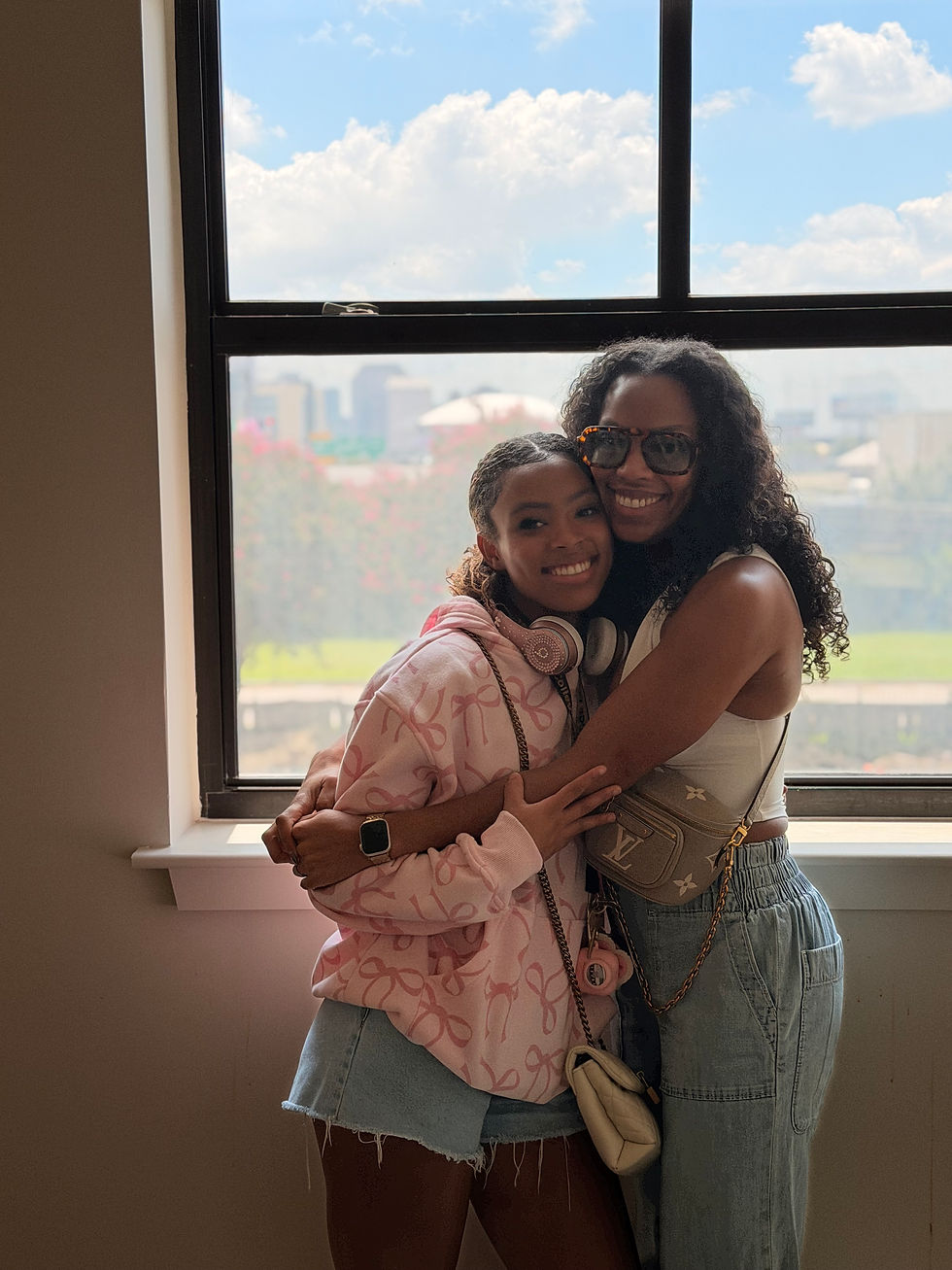
How to be their friend without giving up the hierarchy
Four things that make any friendship real, offered without compromising authority:
Show respect out loud. I say please and thank you to my child. I apologize when I am wrong. I can hold a boundary and still treat her like someone whose dignity matters, because it does.
Let it be reciprocal. Friendship is a two-way street. I do not only pour into her, I let her show up for me too. She knows her care lands, that she can make my day better, that I need her in the room.
Be authentic. She does not get the polished, performing version of me. She gets the real one, the one who gets tired and gets things wrong and says so. Authenticity is what teaches her that real friends do not require a performance.
See her as a whole person. She is not an extension of me and not a project I am managing. She is her own person, with an inner life that has nothing to do with me. When I treat her that way, she learns to expect it from everyone else.
Why it matters as they head back
A child who has the blueprint knows what respect and reciprocity feel like in her body. So when a friendship is missing them, she feels it. She stops mistaking “liked” for known. She stops begging for a seat at a table that was never going to see her. And she learns the grace of a friendship for a season, that not every good thing is meant to last forever, and that a friend who served their purpose was still a real friend.

In week one of this series, we talked about safety. A safe friend is part of that. A safe friend respects your no, considers your wellbeing, and never asks you to trade your safety for a seat at the table. As we send our children back into rooms where they may be the only one who looks like them, the blueprint is how they tell the difference between a friend and an aquaintence so that they can manage the risks appropriately as they get older.
I could not make friends for my daughter. But I could be her first one. I could show her what it feels like to be respected, received, and seen, so she would recognize the real thing when it finally sat down next to her.
I built a companion for this one, a conversation guide called The Friendship Blueprint, with the exact questions to help your child recognize the real thing.
It’s week two of Back to School on the Blog, and this is the work behind Back to School Basics for Parents, dropping this fall. My Truly Yours readers will have the first opportunity for a seat in the room. The weekly note is free and as always it’s, Truly Yours.


Comments